Difficulty: Easy
Tags: CTF, Web Exploitation, Privilege Escalation
Target IP: 10.113.133.17
Objective
Act as Bob, a security engineer, to identify the vulnerabilities exploited on the tourism website in the production environment, retrieve the hidden flags, and restore the website to its original state.
Reconnaissance & Enumeration
The challenge begins by accessing the web service via the target IP: http://10.113.133.17
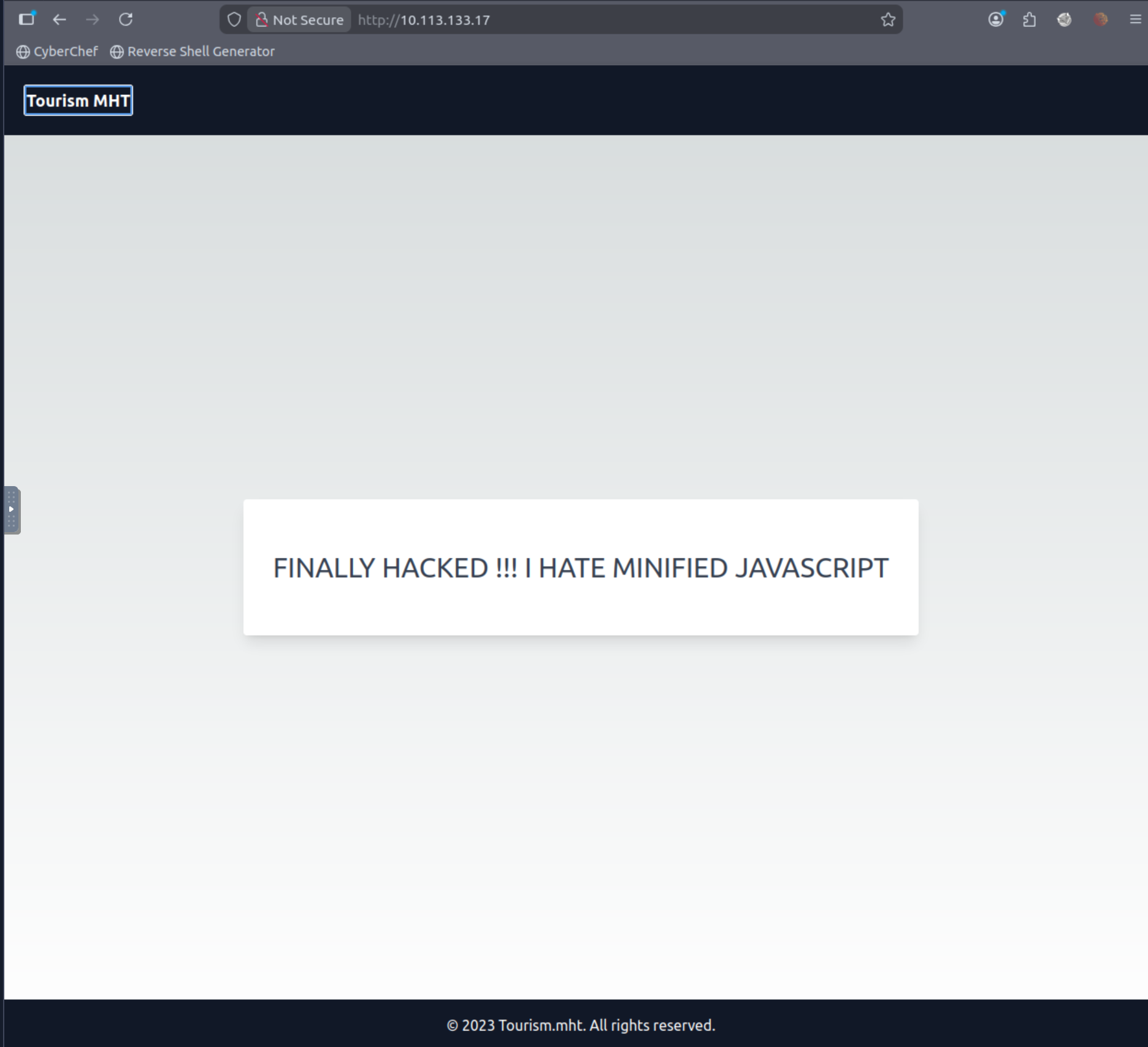
Minified Javascript: the process of removing unnecessary characters from JavaScript code, such as whitespace, comments, and line breaks, without changing its functionality.
By mentioning “minified” it means that the JavaScript code was modified. Inspecting the Page Source reveals several critical clues:
<!-- Rest PHP code and html content -->
<!DOCTYPE html>
<html lang="en">
<head>
<meta charset="UTF-8">
<meta name="viewport" content="width=device-width, initial-scale=1.0">
<title>Tourism Website</title>
<script src='/tailwind.min.js'></script> <!-- THIS IS OFFICIAL FILE - DO NOT CHANGE IT -->
<script src='custom.min.js'></script> <!-- THIS IS CUSTOM JS FILE-->
<link rel="stylesheet" href="/style.css">
</head>
<body>
<!-- Navigation Bar -->
<nav class="bg-gray-900 text-white p-6">
<div class="flex justify-between items-center">
<a href="/" class="text-lg font-bold">Tourism MHT </a>
<ul class="flex items-center gap-5">
<!-- <li><a href="/img" class="hover:text-gray-300">Logs</a></li> Please keep all images in this folder -->
<!-- <li><a href="./logs" class="hover:text-gray-300">Logs</a></li> DevOps team to check and remove it later on -->
</ul>
</div>
</nav>
<!-- Main Content -->
<main class=" mx-auto py-8 h-[80vh] flex items-center justify-center">
<div class="rounded overflow-hidden shadow-lg bg-white p-8 flex ">
<h2 class="text-gray-700 text-3xl py-6"> FINALLY HACKED !!! I HATE MINIFIED JAVASCRIPT</h2>
</div>
</main>
<!-- Footer -->
<footer class="bg-gray-900 text-white flex items-center justify-center">
<div class="text-center p-4">
<p>© 2023 Tourism.mht. All rights reserved.</p>
</div>
</footer></body>
</html>
It mentions PHP at the top of the source code. Moreover, there are relevant comments:
custom.min.js: Custom JS file/img: Keeps all the images./logs: To check logs and remove later for DevOps
Service Analysis
Inspecting the Network tab in browser development tools reveals a GET request to custom.min.js
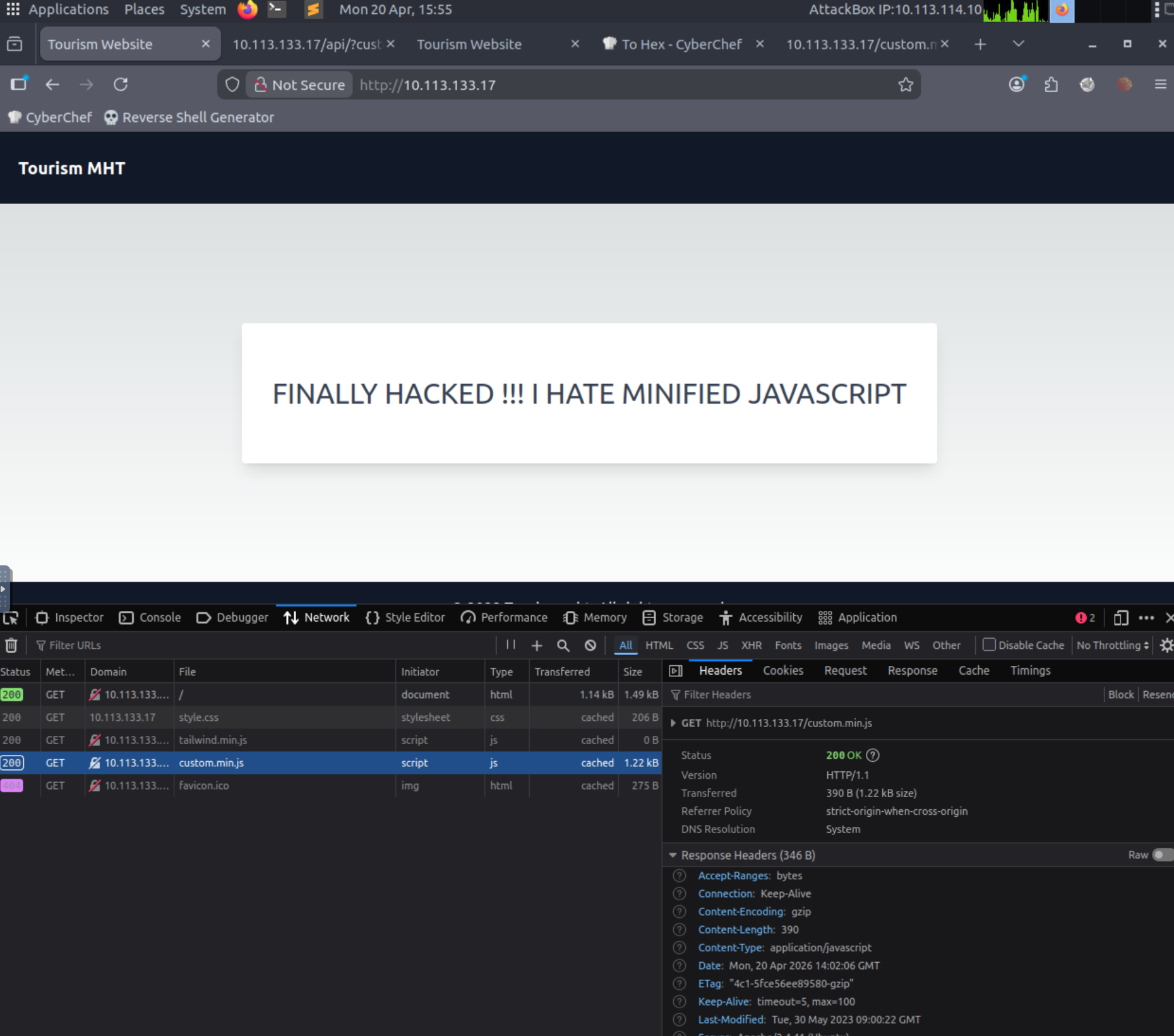
Downloading and examining the file reveals the content is encoded in Hexadecimal (hex)
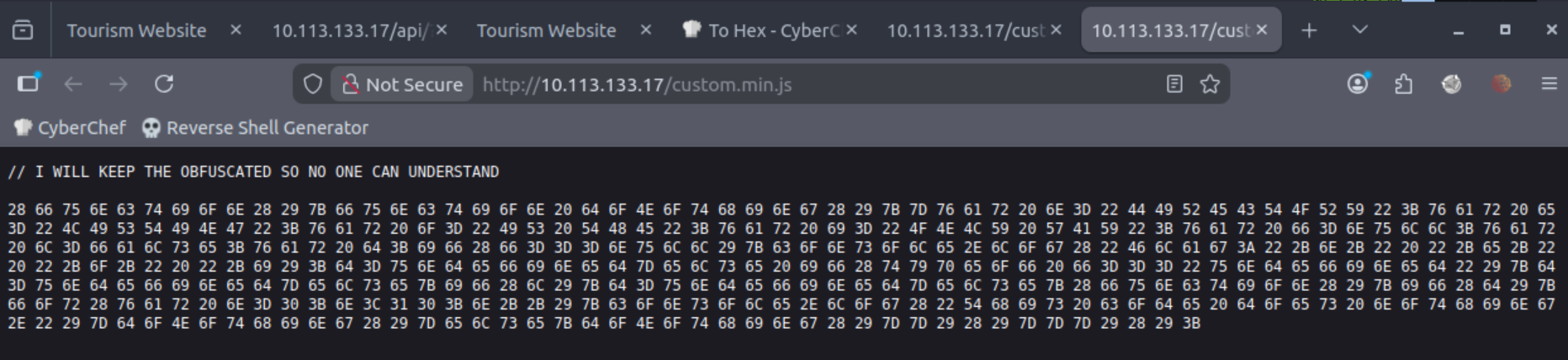
What type of encoding is used by the hackers to obfuscate the JavaScript file?
hex
Using CyberChef to decode the hex string reveals the hidden message DIRECTORY LISTING IS THE ONLY WAY
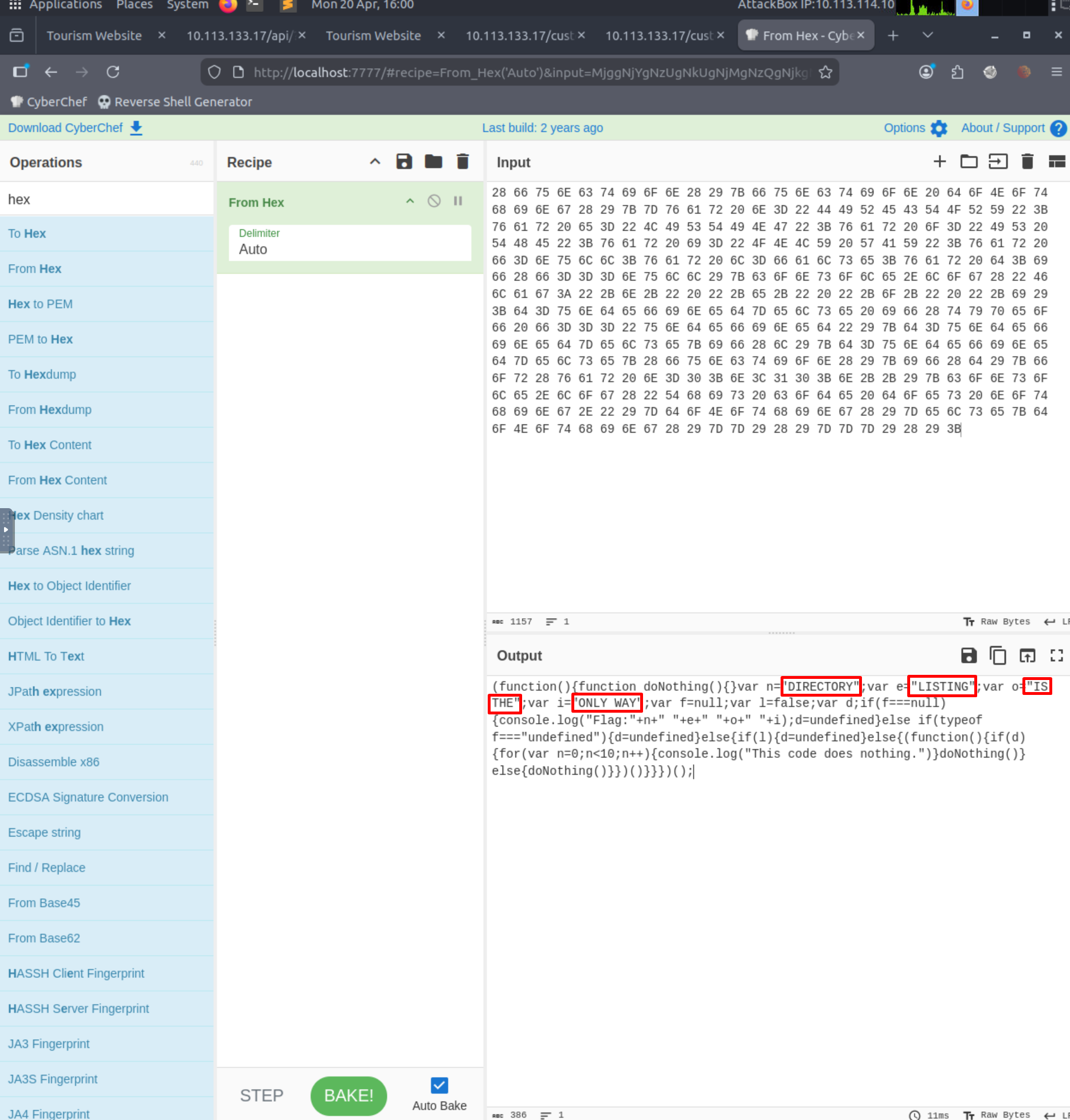
What is the flag value after deobfuscating the file?
DIRECTORY LISTING IS THE ONLY WAY
Directory Enumeration
Following the hints from the source code comments:
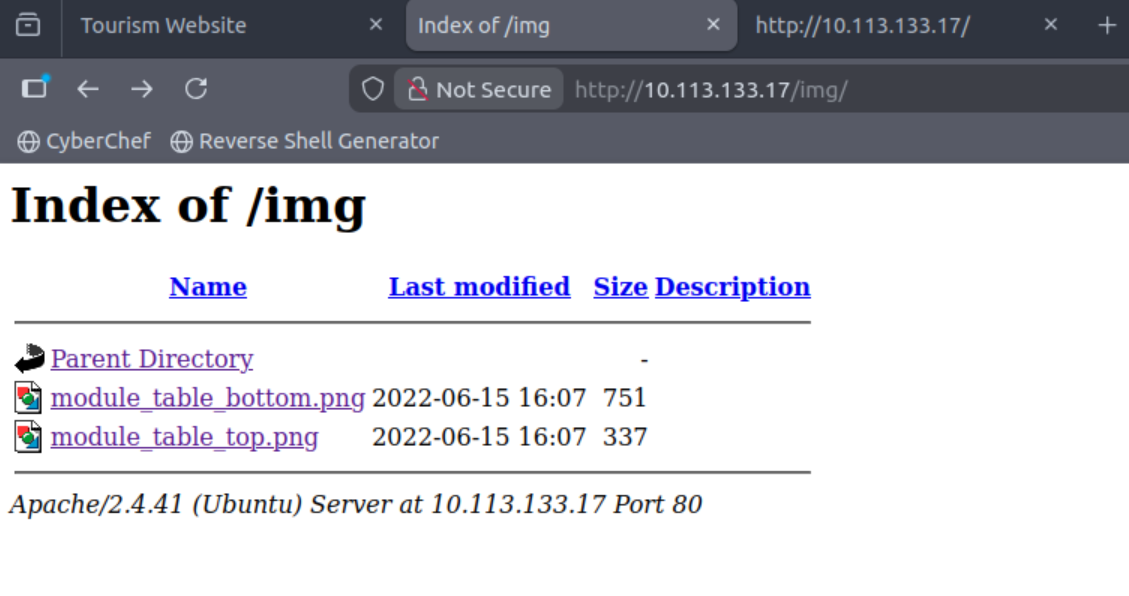
1. Image Directory (/img)
Visiting http://10.113.133.17/img reveals an Apache server running on Ubuntu. No immediate flags are found in the images.
2. Logs Directory (/logs)
Visiting http://10.113.133.17/logs reveals a file named email_dump.txt
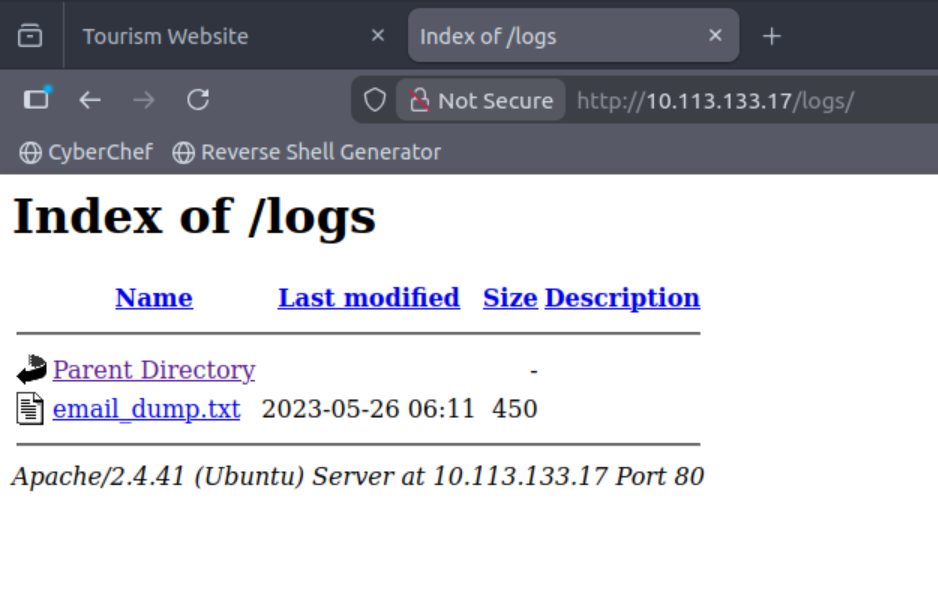
What is the name of the file containing email dumps?
email_dump.txt
Reading the content of email_dump.txt:
From: Bob <bob@tourism.mht>
To: Mark <mark@tourism.mht>
Subject: API Credentials

Hey Mark,

Sorry I had to rush earlier for the holidays, but I have created the directory for you with all the required information for the API.
You loved SSDLC so much, I named the API folder under the name of the first phase of SSDLC.
This page is password protected and can only be opened through the key. THM{100100111}

See ya after the holidays

Bob.
The email mentions the API folder is named after the first phase of SSDLC. The first phase is Planning.
The logs folder contains email logs and has a message for the software team lead. What is the name of the directory that Bob has created?
Planning
The email also provides the password/key: THM{100100111}
What is the key file for opening the directory that Bob has created for Mark?
THM{100100111}
Exploitation
Credential Discovery & API Abuse
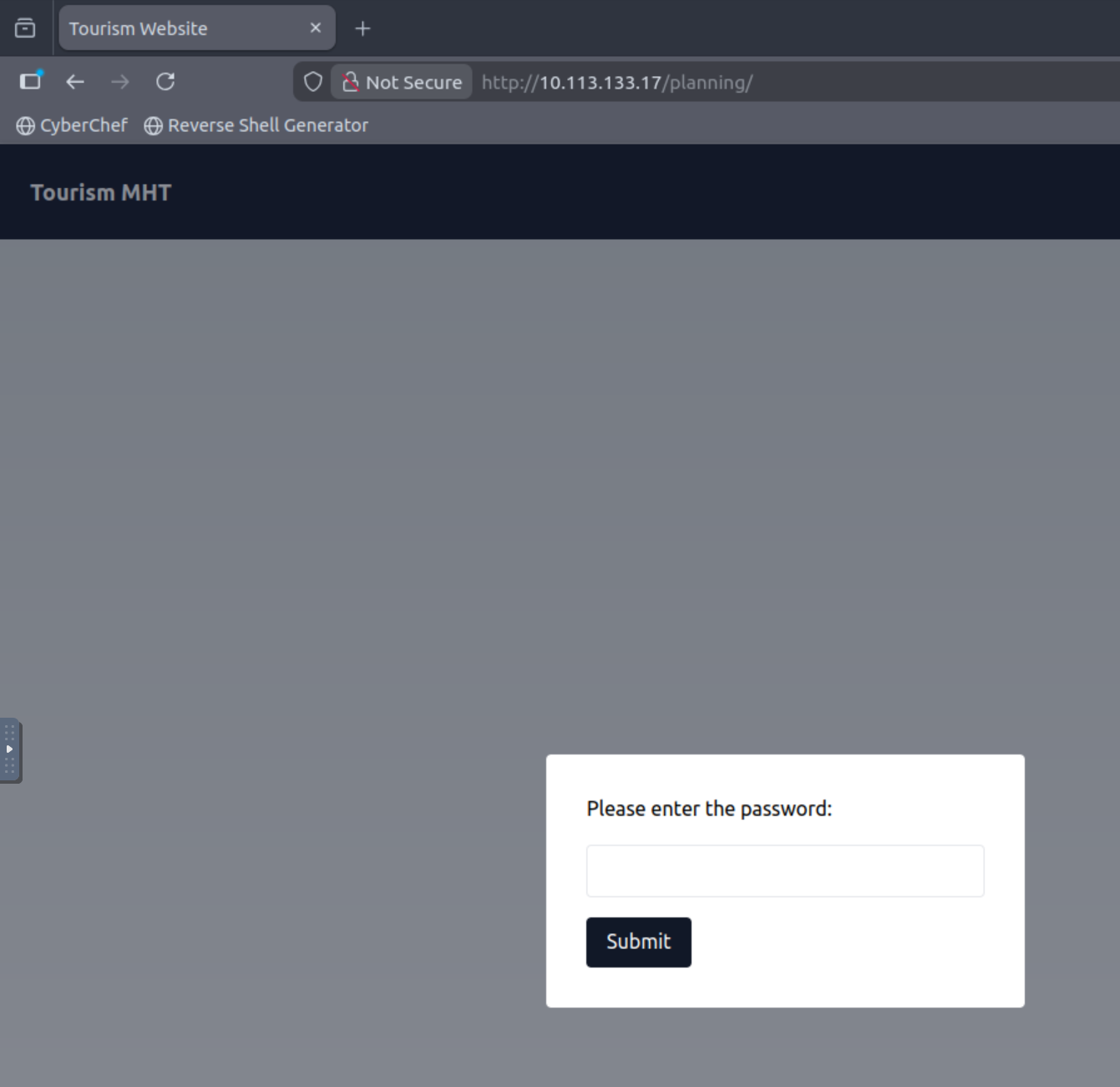
Step 1: Accessing the Planning Directory
Visiting http://10.113.133.17/planning requires a password. Entering the key THM{100100111} grants access.
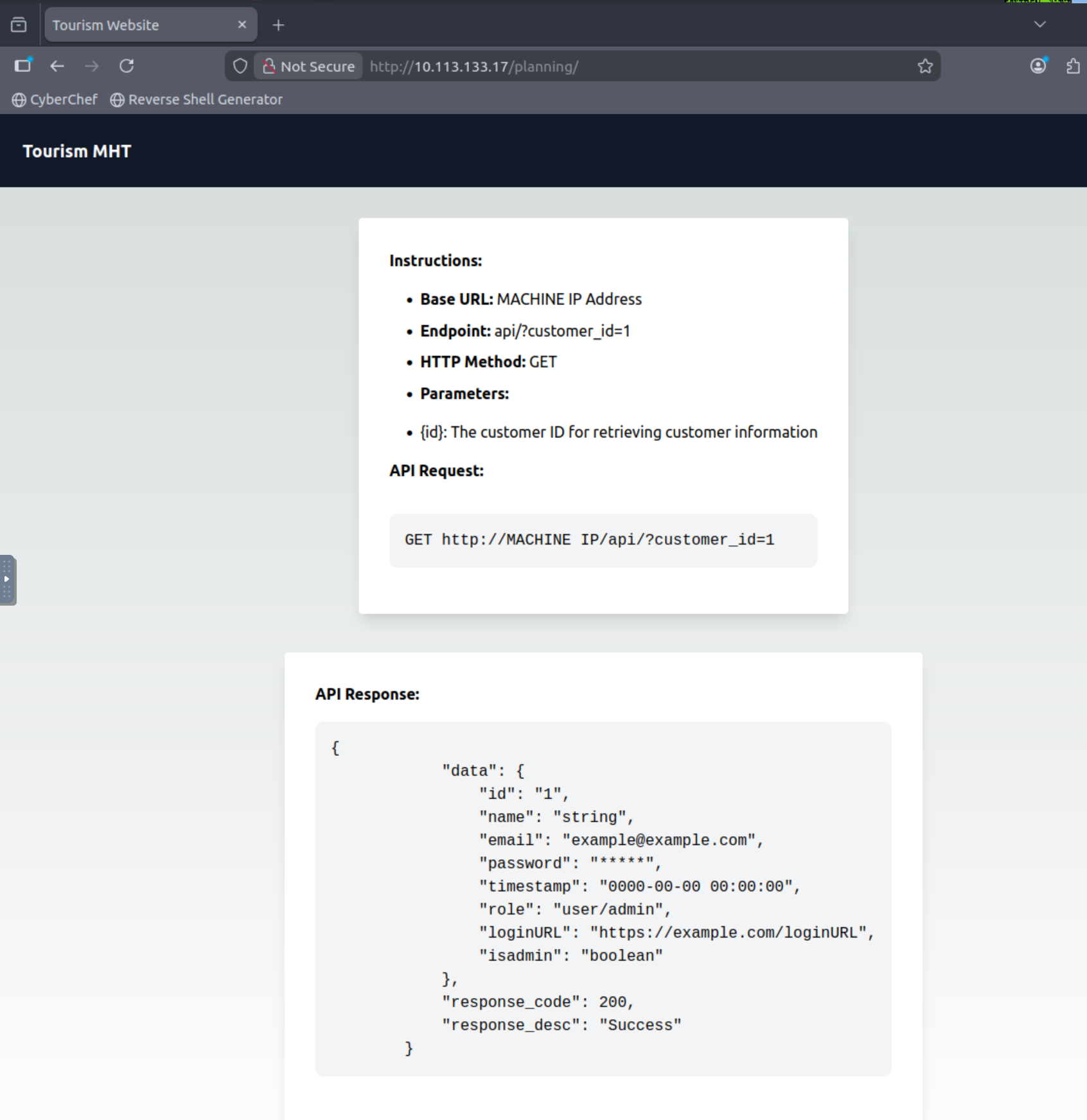
Step 2: Enumerating Users
Inside, we find instructions for an API endpoint: GET http://MACHINE_IP/api/?customer_id=1
The objective is to find specific user details via the API.
Finding User ID 5: Calling http://10.113.133.17/api/?customer_id=5 returns information for a client:
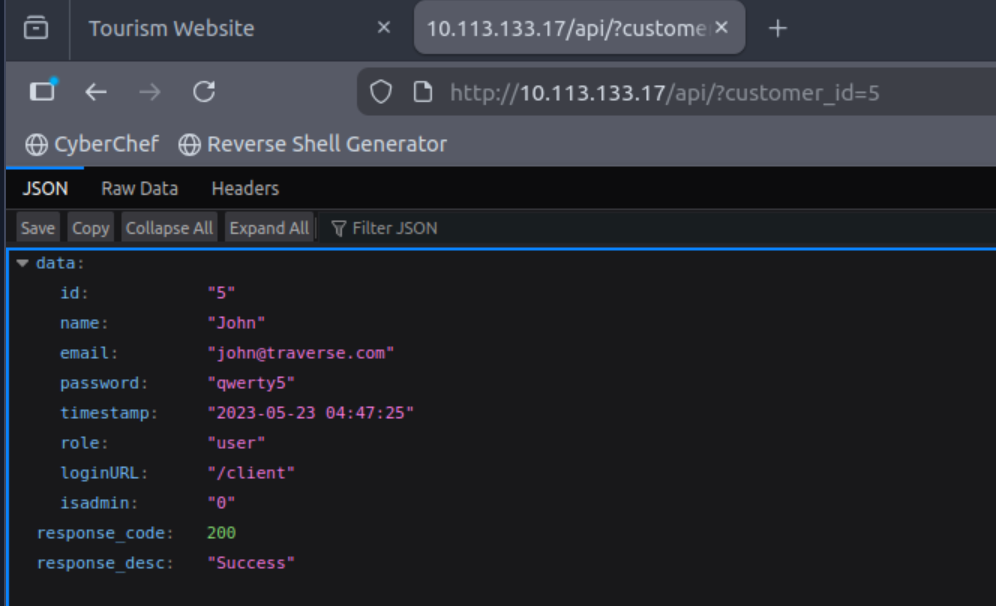
There is an information from the customer id=5, where the email is john@traverse.com and it is a client user.
What is the email address for ID 5 using the leaked API endpoint?
john@traverse.com
Finding the Admin User: Iterating through IDs reveals that id=3 belongs to an administrator. Calling: http://10.113.133.17/api/?customer_id=3 reveals:
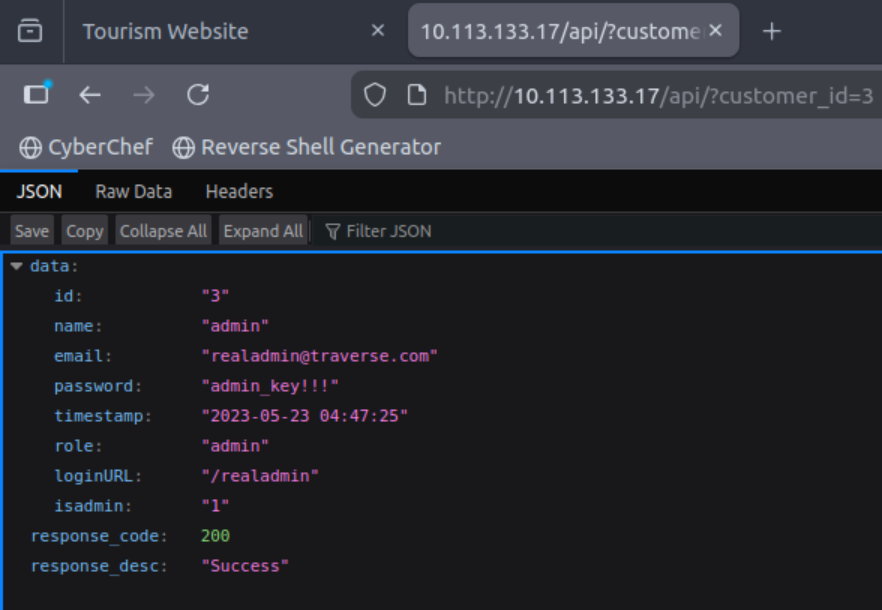
What is the ID for the user with admin privileges?
3
It displays the endpoint to get access /realadmin and it reveals an email realadmin@traverse.com, name admin and password admin_key!!!
What is the endpoint for logging in as the
admin? Mention the last endpoint instead of the URL./realadmin
Step 3: Gaining Admin Access
Navigating to http://10.113.133.17/realadmin:
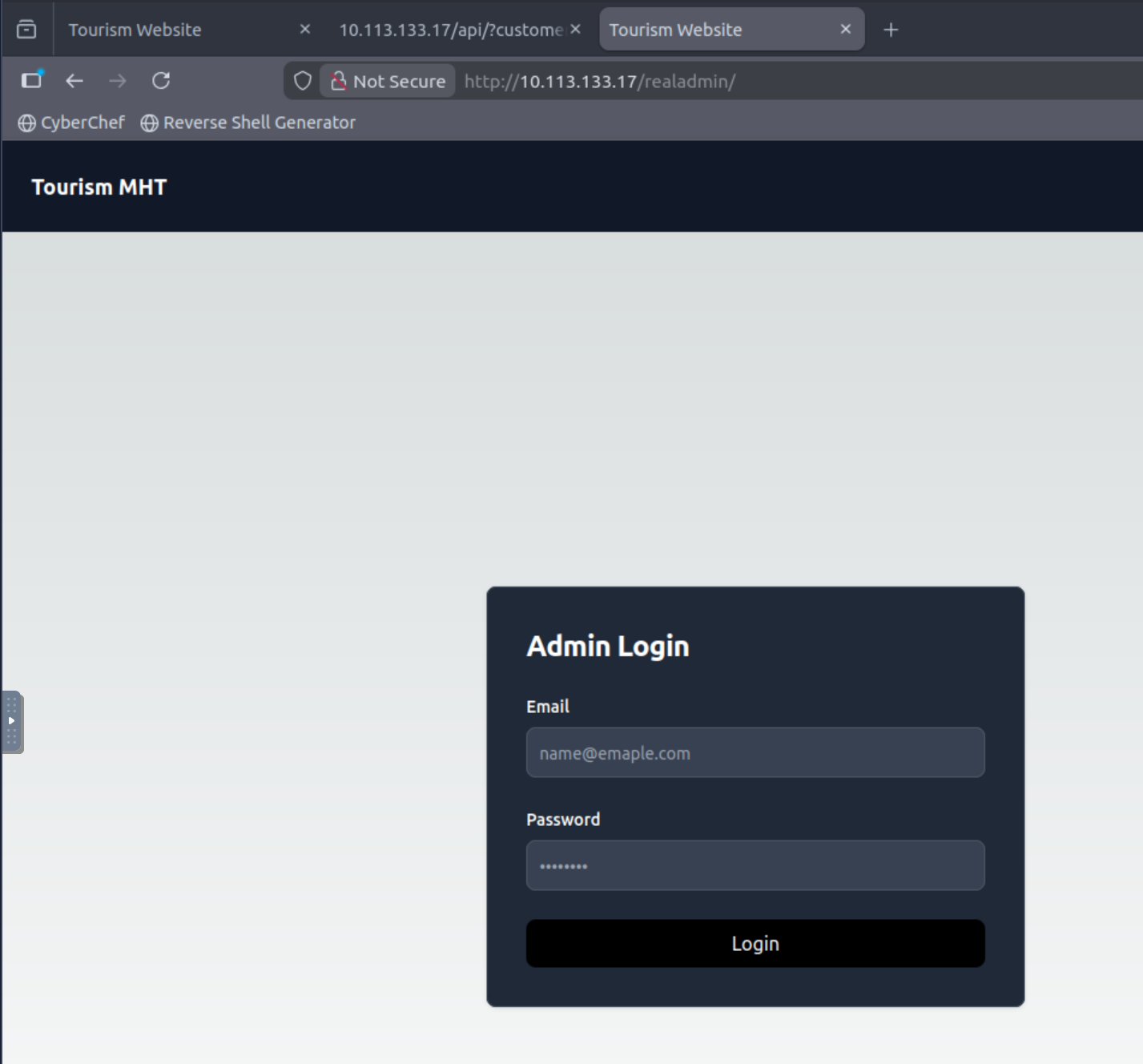
Logging in with the credentials found (realadmin@traverse.com / admin_key!!!) grants access to the admin panel.
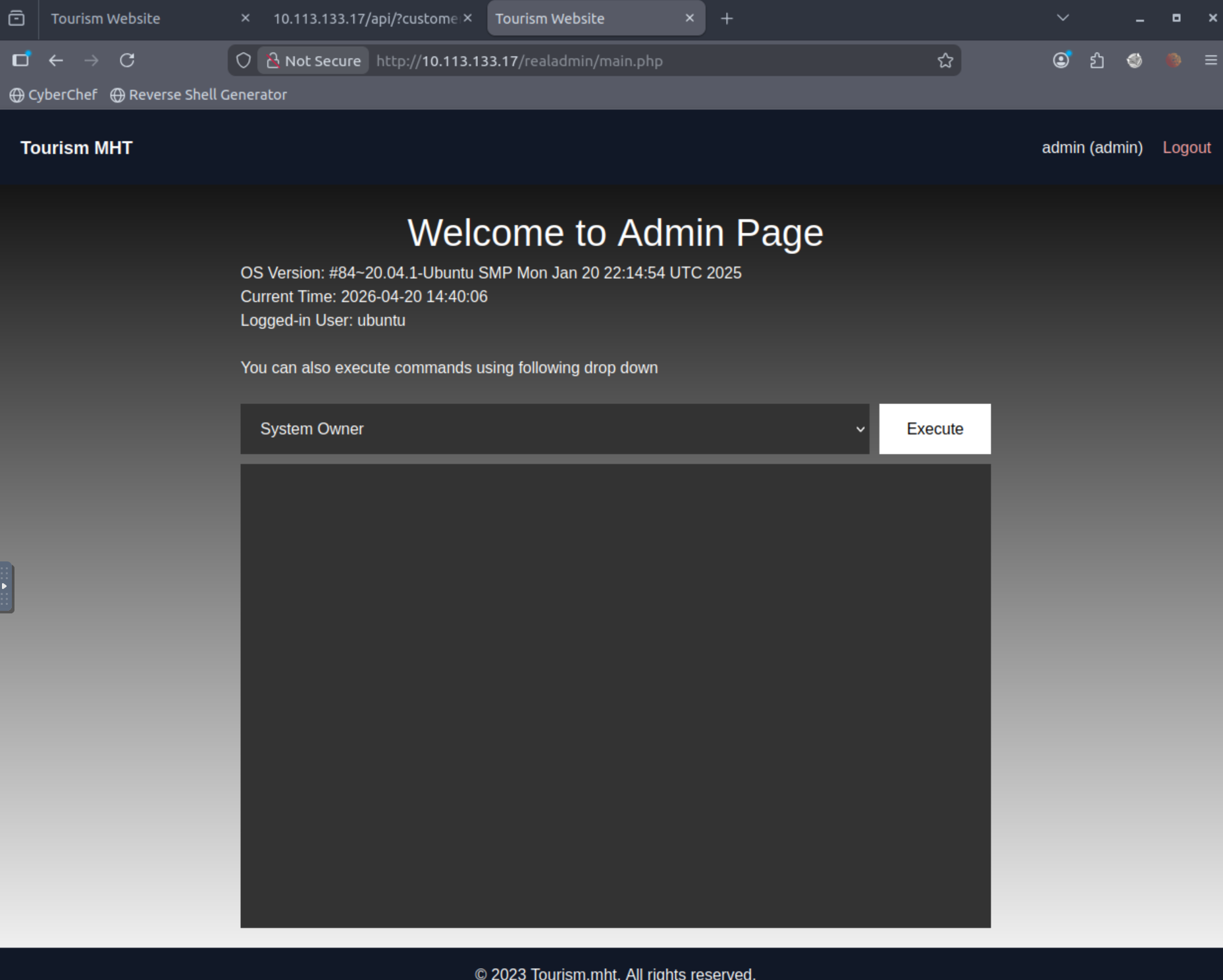
Step 4: Environment Check
The admin panel offers options to execute system commands.
System Owner: outputwww-data(equivalent towhoami)Current Directoryoutput/var/www/html/realadmin(equivalent topwd)
Using the browser’s Network tab to intercept the POST request, we can modify the payload to execute arbitrary commands.
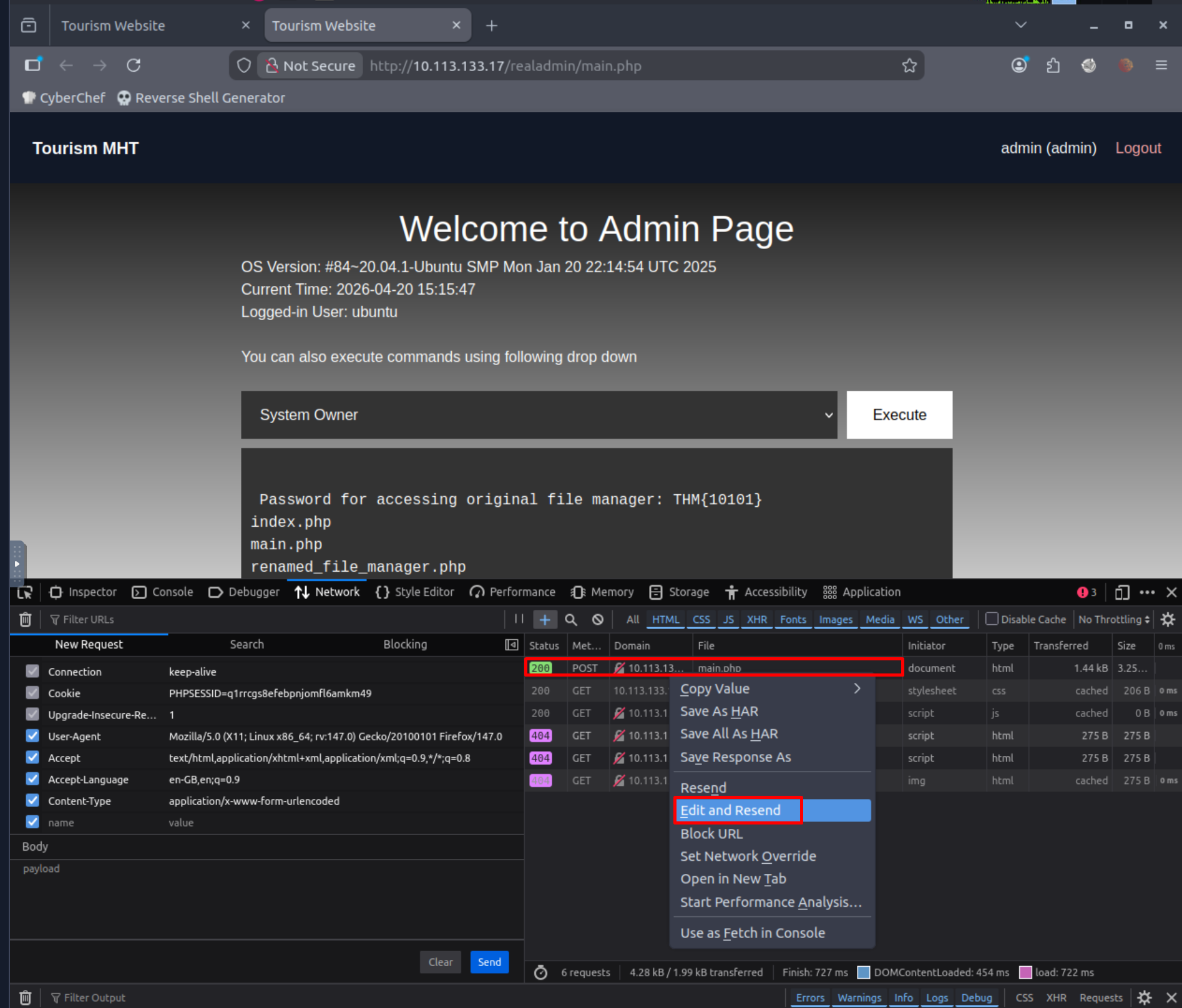
Sending commands=ls -lsa reveals the directory contents.
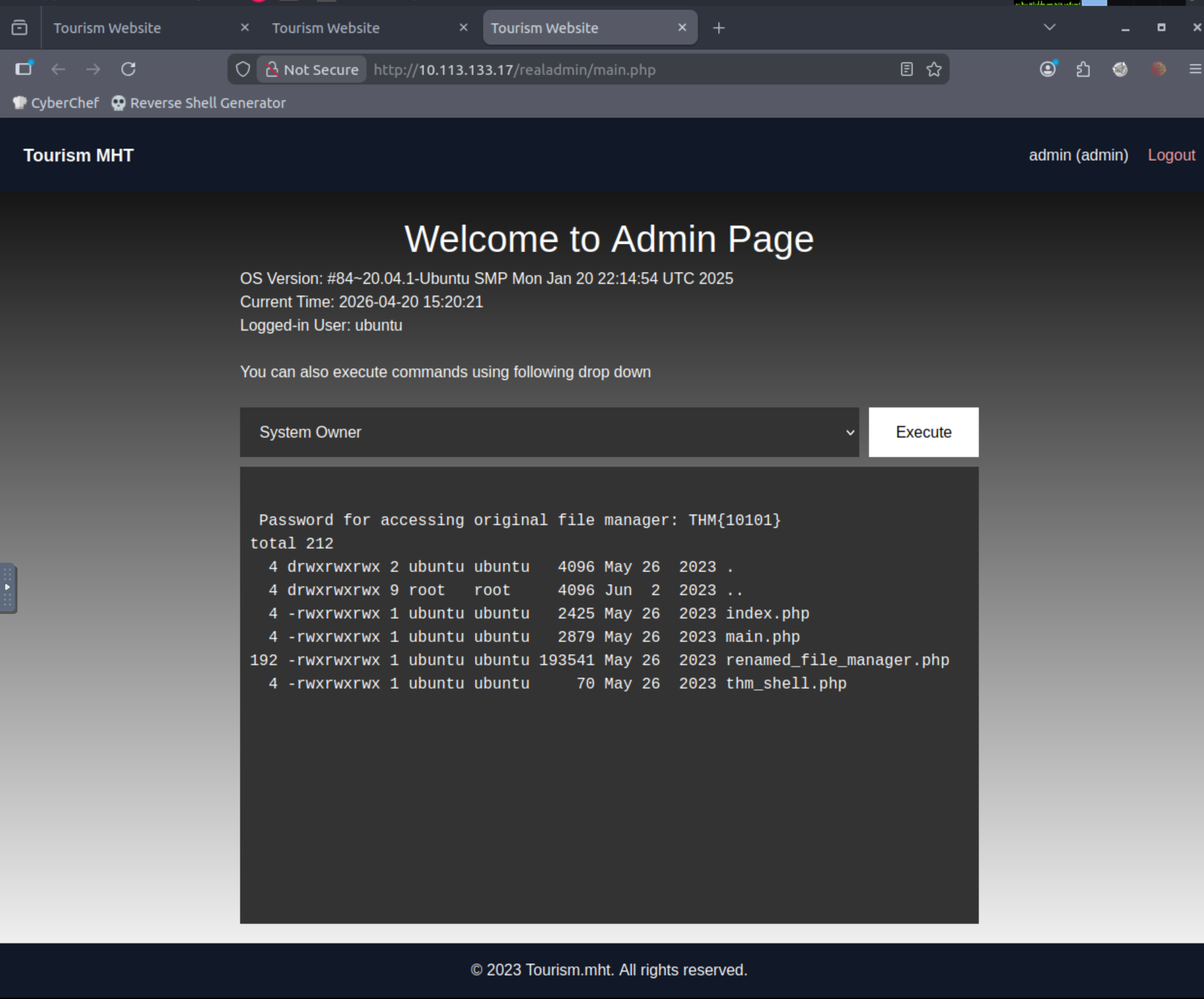
Two critical files are identified:
thm_shell.php: likely the web shell used by the attacker.
Can you find the name of the web shell that the attacker has uploaded?
thm_shell.php
renamed_file_manager.php: a renamed file manager tool
What is the name of the file renamed by the attacker for managing the web server?
renamed_file_manager.php
A password for the file manager is also displayed in the output:THM{10101}
Step 5: Restoring the Website
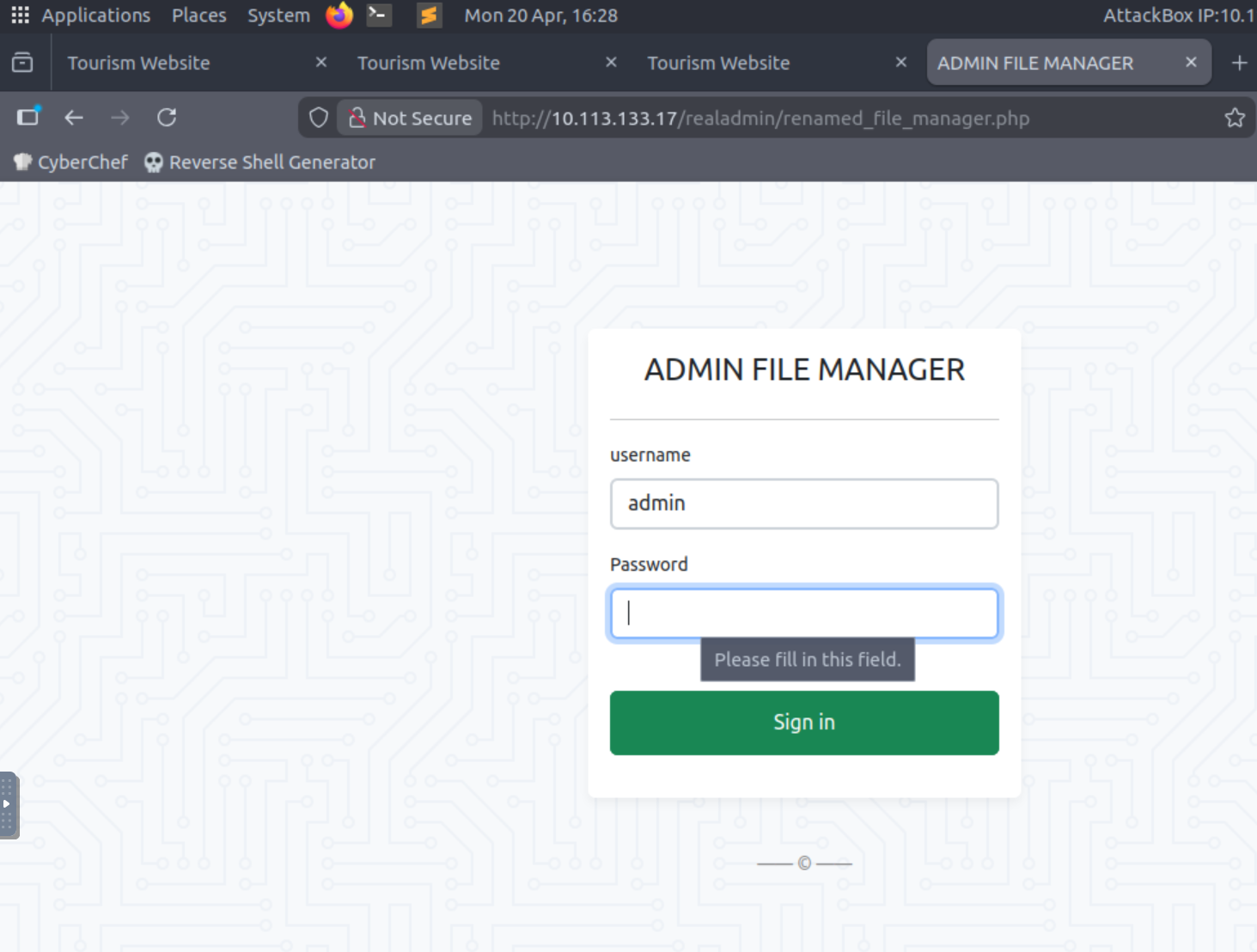
Accessing http://10.113.133.17/realadmin/renamed_file_manager.php with the passwordTHM{10101} opens the file manager.
Locating the index.php, we observe it has been modified to display “FINALLY HACKED” message.
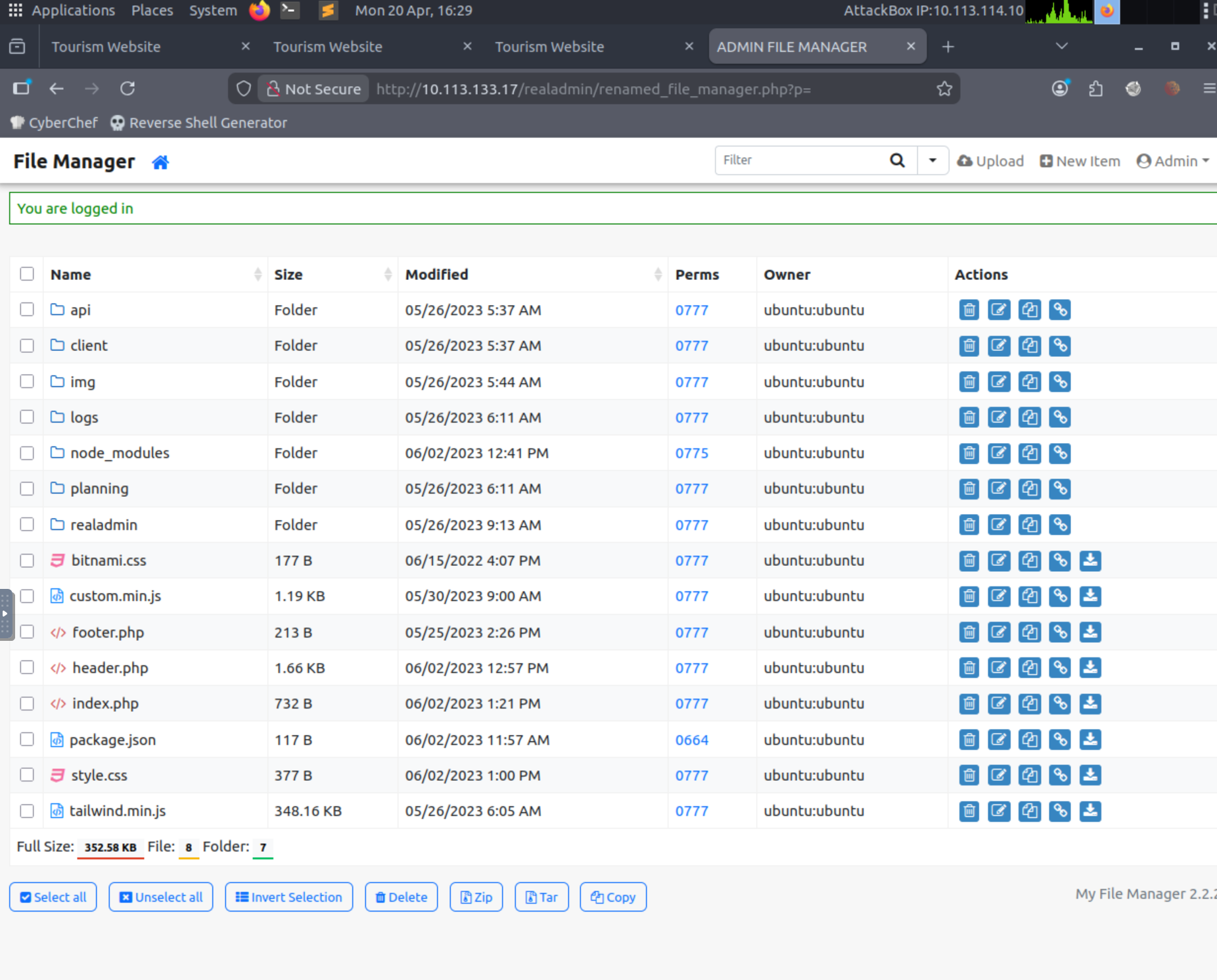
Editing the file to remove the malicious message restores the site.
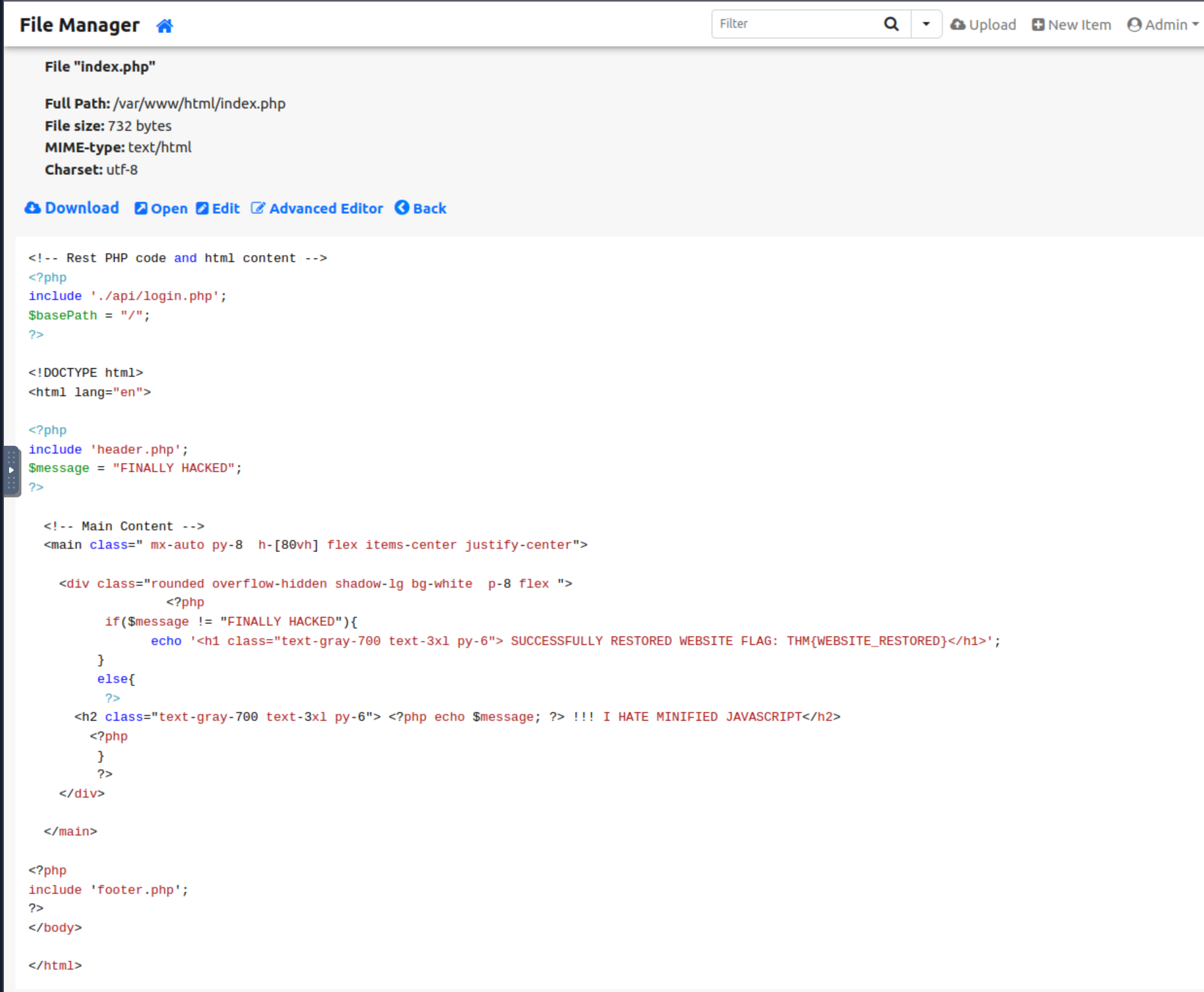
The final flag of this room is in the file: THM{WEBSITE_RESTORED}
Can you use the file manager to restore the original website by removing the “
FINALLY HACKED” message? What is the flag value after restoring the main website?THM{WEBSITE_RESTORED}
Conclusion
By analyzing the source code for hidden comments and obfuscated JavaScript, we identified the encoding method and a hint for directory listing. Leveraging directory enumeration, we found an email dump that revealed the naming convention for a protected directory and the password to access it. Inside, we discovered an insecure API endpoint that allowed us to enumerate users and harvest admin credentials. Finally, using the admin panel to execute commands, we identified the attacker’s web shells, accessed the file manager, and restored the compromised website.
Mitigations and Remediations
To prevent these specific vulnerabilities in a production environment, the following measures should be implemented:
- Code Review & Sanitization: remove all hardcoded credentials, internal paths, and debug messages from source code before deployment. Avoid leaving comments that hint at hidden directories.
- Disable Directory Listing: configure the web server (Apache/Nginx) to disable directory listing (
Options -Indexes) to prevent attackers from browsing file structures. - Secure API Endpoints: implement proper authentication and authorization checks on all API endpoints. Do not expose sensitive user data (emails, passwords) via unauthenticated or poorly secured GET requests.
- Input Validation & Sandboxing: restrict the ability of web applications to execute system commands. If command execution is necessary, ensure strict input validation and sandboxing to prevent arbitrary code execution.
Final Answers
- What type of encoding is used by the hackers to obfuscate the JavaScript file?
hex - What is the flag value after deobfuscating the file?
DIRECTORY LISTING IS THE ONLY WAY - What is the name of the file containing email dumps?
email_dump.txt - What is the name of the directory that Bob has created?
Planning - What is the key file for opening the directory that Bob has created for Mark?
THM{100100111} - What is the email address for ID 5 using the leaked API endpoint?
john@traverse.com - What is the ID for the user with admin privileges?
3 - What is the endpoint for logging in as the
admin? Mention the last endpoint instead of the URL./realadmin - Can you find the name of the web shell that the attacker has uploaded?
thm_shell.php - What is the name of the file renamed by the attacker for managing the web server?
renamed_file_manager.php - Can you use the file manager to restore the original website by removing the “
FINALLY HACKED” message? What is the flag value after restoring the main website?THM{WEBSITE_RESTORED}